Self-Help Books That Actually Work

Self-help books that actually work. No toxic positivity, no empty hype. These are the ones people come back to years later because they changed something real.

Most people who avoid the self-help section are not wrong to be suspicious. The genre has earned its reputation: recycled platitudes dressed up in motivational packaging, books that make you feel inspired for a weekend and leave nothing behind. The problem is that this justified skepticism also keeps thoughtful people away from the handful of books that are genuinely, measurably useful. Cognitive behavioral therapy has decades of clinical evidence behind it. Habit science has been validated in labs and replicated across populations. Stoic philosophy has been helping people think clearly under pressure for two thousand years. The good self-help books are not motivational fluff. They are practical psychology written for a general audience, and the best of them will change how you operate long after the initial enthusiasm fades.

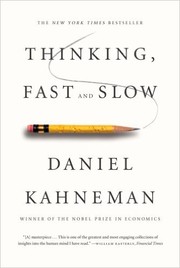
The books on this list come from different disciplines but share a common structure: honest diagnosis of the problem, a framework you can actually apply, and results that hold up over time. Burns draws on clinical CBT to show you exactly how your thinking distorts under stress and how to correct it. Clear reverse-engineers habit formation into four laws that work whether you are trying to exercise more or stop checking your phone. Kahneman, a Nobel laureate, maps the two systems that drive every decision you make, and once you see them you cannot unsee them. Frankl found meaning inside a concentration camp and built a therapeutic approach around the insight that purpose is chosen, not discovered. These are not airport-bookstore impulse buys. They are books that people recommend five, ten, twenty years after reading them because the ideas actually stuck.

If the list feels long, start with the one that speaks to where you are right now. If you are trying to build a new habit or break an old one, Atomic Habits is the clearest starting point. If your inner dialogue has been running you into the ground, Feeling Good will give you tools you can use today. If something deeper is off and you are not sure what, Man's Search for Meaning tends to find the right nerve.

1

The Four Agreements

by Unknown

Best for: simplifying life

Ruiz draws on Toltec wisdom to distill an entire philosophy of living into four rules: be impeccable with your word, don't take anything personally, don't make assumptions, and always do your best. The simplicity is the point, because each agreement, when you actually try to practice it for a week, turns out to be far more demanding and revealing than it sounds. Not taking things personally, for instance, requires you to genuinely accept that other people's behavior is about their own reality, not yours, which is a radical shift for most people and one that eliminates an enormous amount of unnecessary suffering. This is the shortest and most accessible book on the list, and readers who come to it skeptically tend to be the ones who benefit most.

140 pages Short (< 200 pages) Personal Development
View on Amazon
2

Feeling good

by Unknown

Best for: managing negative thinking

Burns took Aaron Beck's cognitive behavioral therapy framework and made it usable by anyone with a pen and paper, and the result is the most frequently recommended book by mental health professionals in national surveys. The core technique is disarmingly simple: write down the distressing thought, identify which of ten specific cognitive distortions it contains (all-or-nothing thinking, catastrophizing, mind reading, and so on), then write a rational response. What makes it powerful is not the simplicity but the precision, because once you learn the distortion categories, you start recognizing them everywhere in your own thinking, and that recognition alone loosens their grip. The book has been included in the UK National Health Service bibliotherapy program for good reason: it works, it has the clinical data to prove it, and unlike a therapist, it is available at three in the morning when your brain is doing its worst.

736 pages Long (> 400 pages)
View on Amazon

The pattern across these books is worth noticing: none of them promise transformation through willpower alone, and none of them ask you to pretend your way into a better life. What they offer instead is a clearer picture of how your mind actually works, where the distortions creep in, where the friction lives, what the leverage points are, and then a set of tools precise enough to do something about it. That combination of honesty and practicality is what separates the books that last from the ones that don't. If you give any one of these a genuine try, not just reading it but doing the exercises, testing the frameworks, applying the thinking to something real in your life, you will likely find that the skepticism you brought to the self-help genre starts to feel like it was protecting you from the wrong books rather than from the whole idea.

Explore More Guides

Not sure which book is right for you?

Take our 2-minute discovery quiz and get personalized recommendations based on where you are in your journey.

Take the Discovery Quiz