Best Books for Anxiety & Stress Relief

The best books for anxiety and stress relief. Science-backed and wisdom-tested picks to help you find calm without bypassing your feelings.

Anxiety has a way of making you feel like the problem is fundamentally you, that other people handle things, and you just spiral. That feeling is itself a symptom. What's actually happening when the alarm fires is that your nervous system is doing exactly what evolution designed it to do, which is to scan for threats and prepare you to respond to them. The trouble is that your body cannot distinguish between a genuine emergency and a difficult email, so it runs the same full biological program for both, flooding you with cortisol, tightening your chest, narrowing your focus, and convincing you that everything is urgent and nothing is safe. Understanding that mechanism is the beginning of working with it.

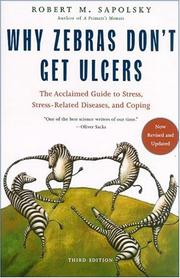
The books here approach this from different directions, because anxiety genuinely benefits from being worked on at more than one level. Van der Kolk spent decades showing how stress and trauma live in the body, not just the mind. Sapolsky explains the evolutionary design flaw that makes modern humans uniquely bad at turning the stress response off. Kabat-Zinn's MBSR program, developed in a hospital setting for people with chronic pain and illness, remains the most clinically validated framework for changing how you relate to difficulty. Chödrön and Brach offer something different: not techniques, but a shift in relationship to the anxiety itself, a way to stop treating it as the enemy. Nestor, unexpectedly, shows that the simplest intervention available to you is also one of the most powerful.

Some of these are long books for people who want to understand the whole picture. Others are thin and immediate. If you're in the middle of something hard right now, start with Chödrön or Brach. If you want to understand what's happening in your body before you try to change it, start with van der Kolk or Sapolsky. The understanding tends to soften the grip a little, even before you've tried a single technique.

1

When things fall apart

by Unknown

Best for: those in crisis

Chödrön wrote this during a difficult period in her own life, drawing on Tibetan Buddhist teachings to address not how to fix difficulty but how to stop running from it. The central insight is that the desperate need to escape discomfort, to fix, solve, or numb whatever feels unbearable, is itself the primary source of suffering. What she teaches instead is sitting with groundlessness: learning to be present with uncertainty rather than fighting it. If you're currently in crisis and everything you've tried to fix it has left you more exhausted, start here.

154 pages Short (< 200 pages) Buddhism
View on Amazon
2

Radical acceptance

by Unknown

Best for: self-critical minds

Brach is both a clinical psychologist and a Buddhist meditation teacher, and this book is shaped by both. A lot of anxiety, she argues, is driven by a background belief that there is something fundamentally wrong with you, a kind of internal trance that keeps you judging, bracing, and trying to be different from what you are. The practices here, drawn from Buddhist meditation and Western psychotherapy, are designed to interrupt that specific pattern. If your anxiety travels with a harsh inner critic, this is the most targeted book on the list for that combination.

352 pages Medium (200-400 pages) Buddhism
View on Amazon
3

The untethered soul

by Unknown

Best for: getting unstuck from thought loops

Singer's book is more philosophical than practical, but it holds one insight worth the whole read: you are not your anxious thoughts, you are the one watching them. Most people experience this as an intellectual idea at first and then, somewhere around the third or fourth time they sit with it, as something that actually shifts. Short chapters, accessible writing, and the kind of perspective change that some readers find happens quickly and others need to return to before it fully lands.

181 pages Short (< 200 pages) Taoism
View on Amazon
4

Breathing I Pray

by Ivan Mann

Best for: immediate practical tools

A science journalist's investigation into breathing that turned out to be one of the most practical anxiety books available. Controlled breathing works directly on the nervous system through the vagus nerve, triggering the same physiological shift that meditation produces but faster and more accessible to people who cannot yet sit still. Nestor spent years interviewing researchers and practitioners, and the techniques he brings back, nasal breathing, extended exhales, specific rhythms, are simple enough to use in the middle of a difficult moment.

144 pages Short (< 200 pages)
View on Amazon

The research here tends to work in layers. The first time you read about the nervous system and why anxiety feels the way it does, it gives you some relief. The second time you read something that connects understanding to a specific practice, it gives you a tool. The third time you read something and think, this is exactly what has been happening to me, something shifts more permanently. These books are not a linear path from anxious to calm. They are different approaches to the same territory, and different people find different doors in. What they share is that they take the problem seriously, explain it honestly, and trust you to do the work.

Explore More Guides

Not sure which book is right for you?

Take our 2-minute discovery quiz and get personalized recommendations based on where you are in your journey.

Take the Discovery Quiz